Boost
Railway Station Mechelen
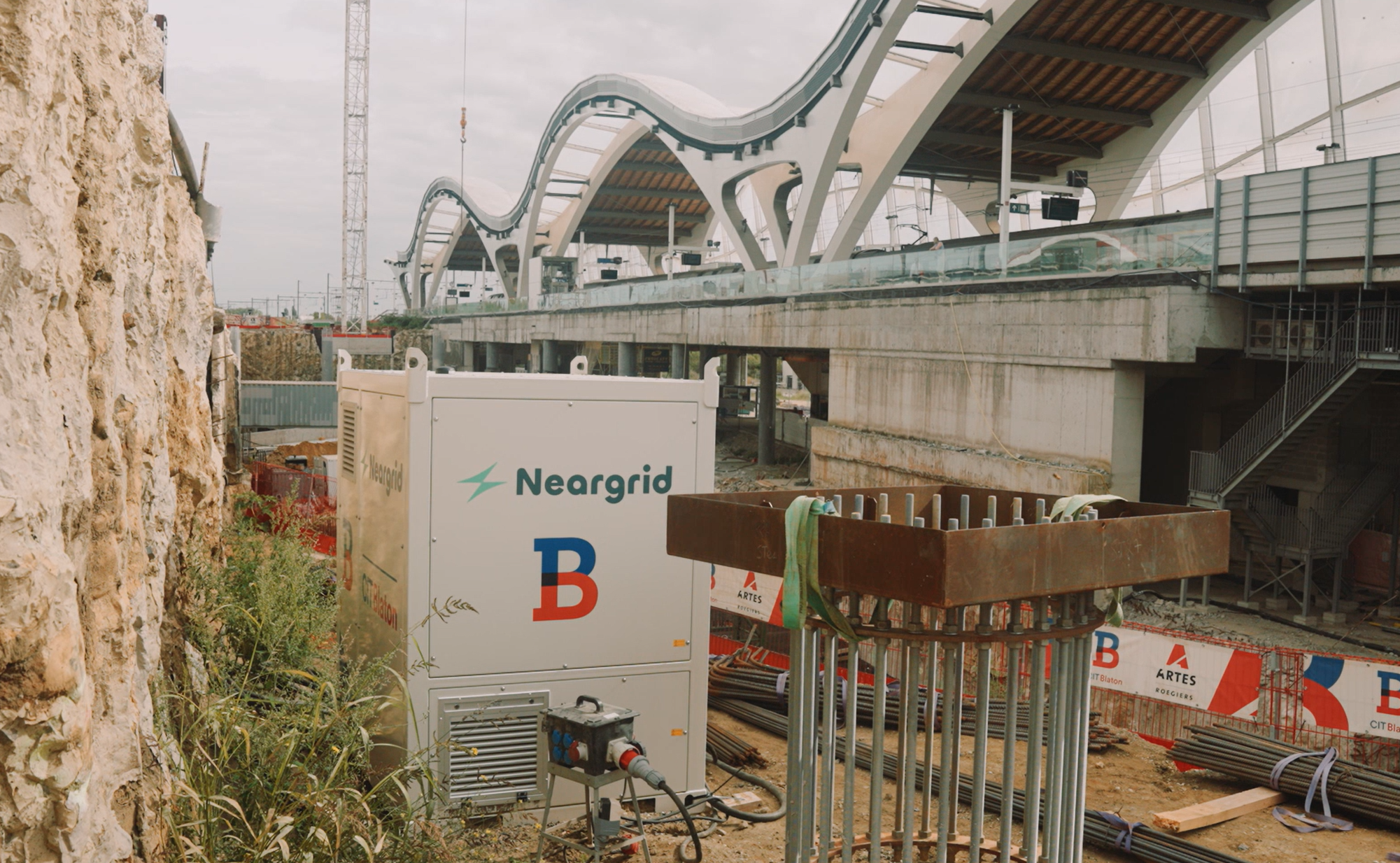
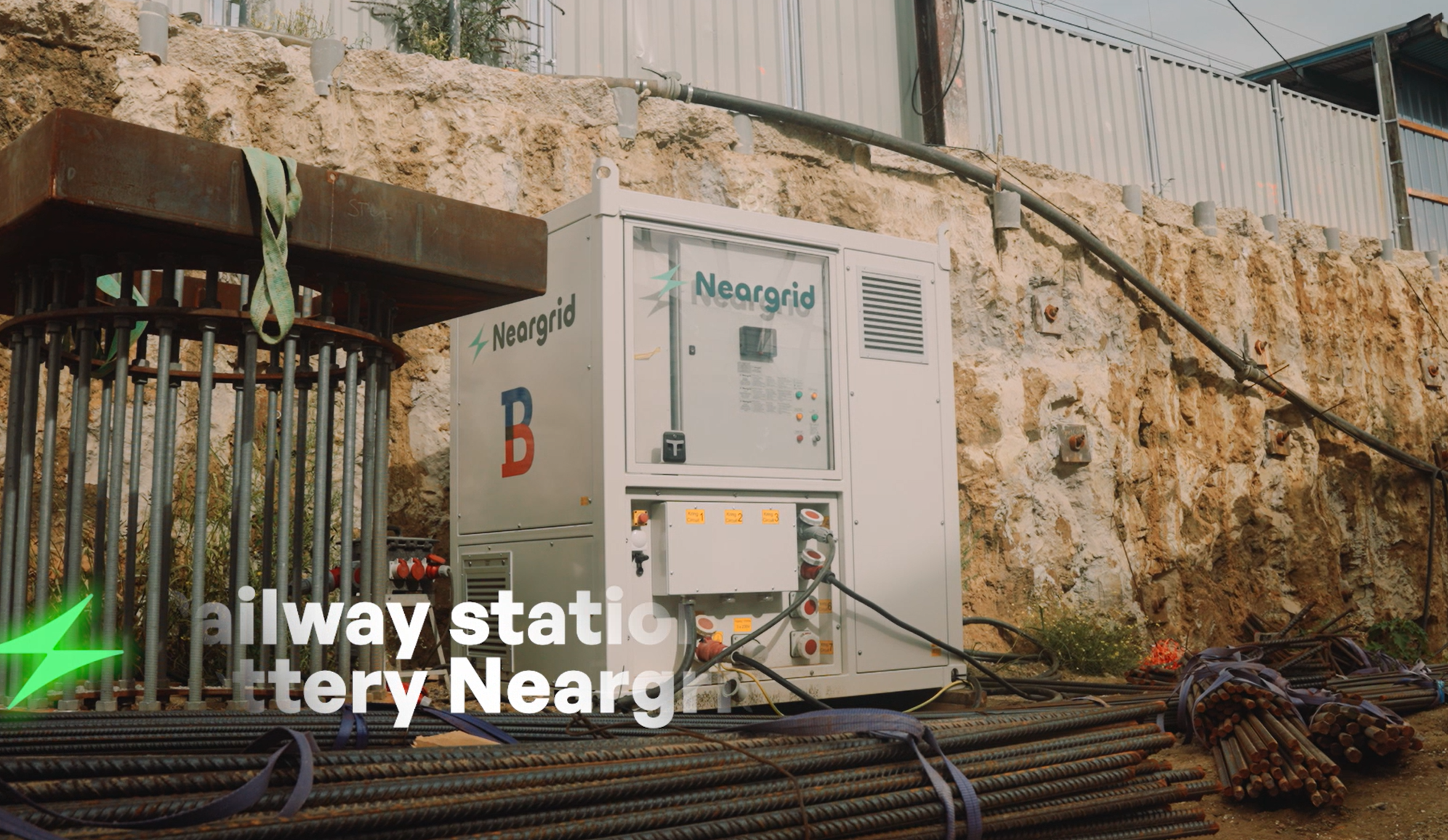
This project demonstrates how a diesel generator on a construction site was completely replaced by a battery solution, without impacting continuity or power.
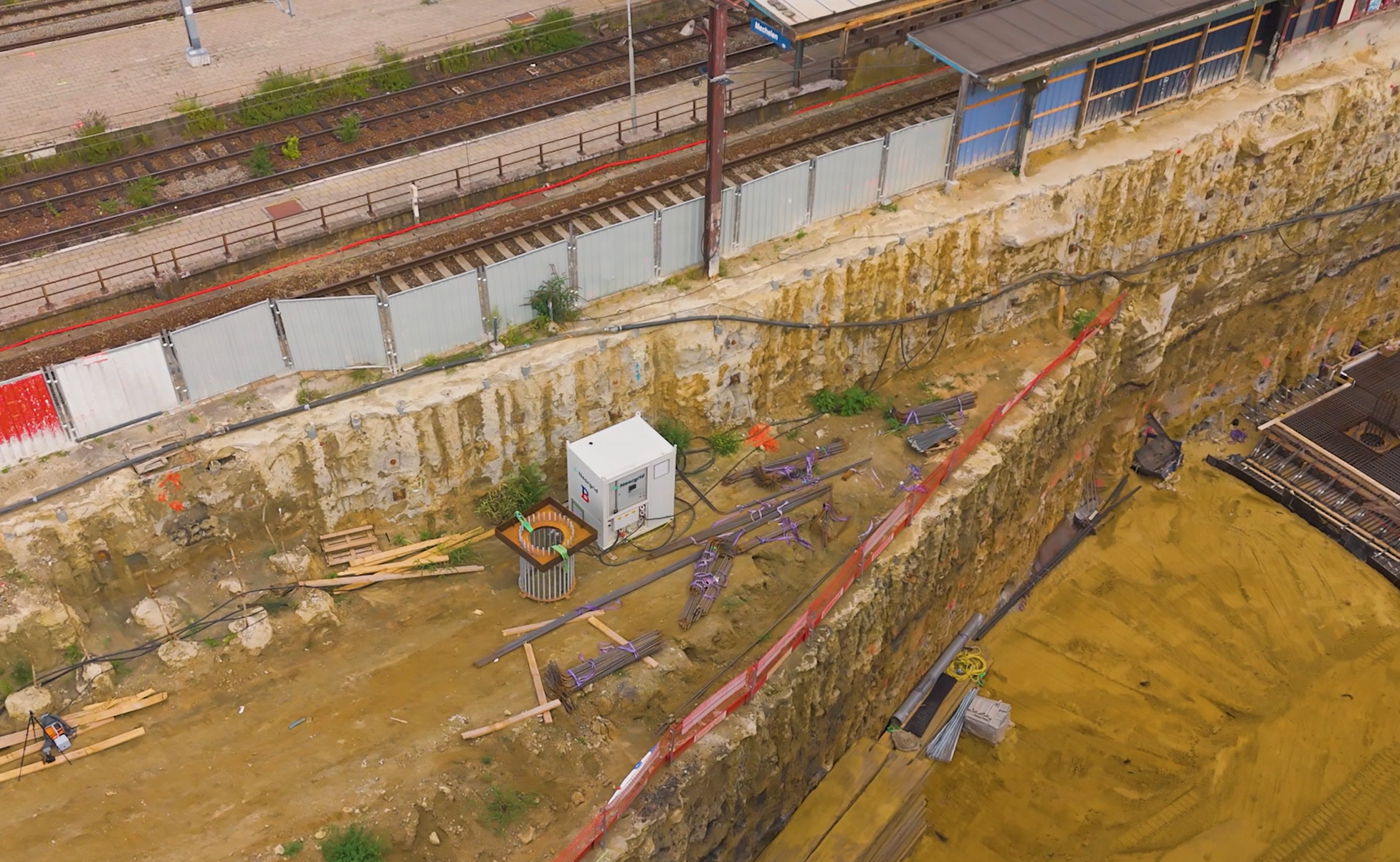
In addition, we avoided long and heavy cable routes by organizing energy generation closer to the consumers.
The challenge
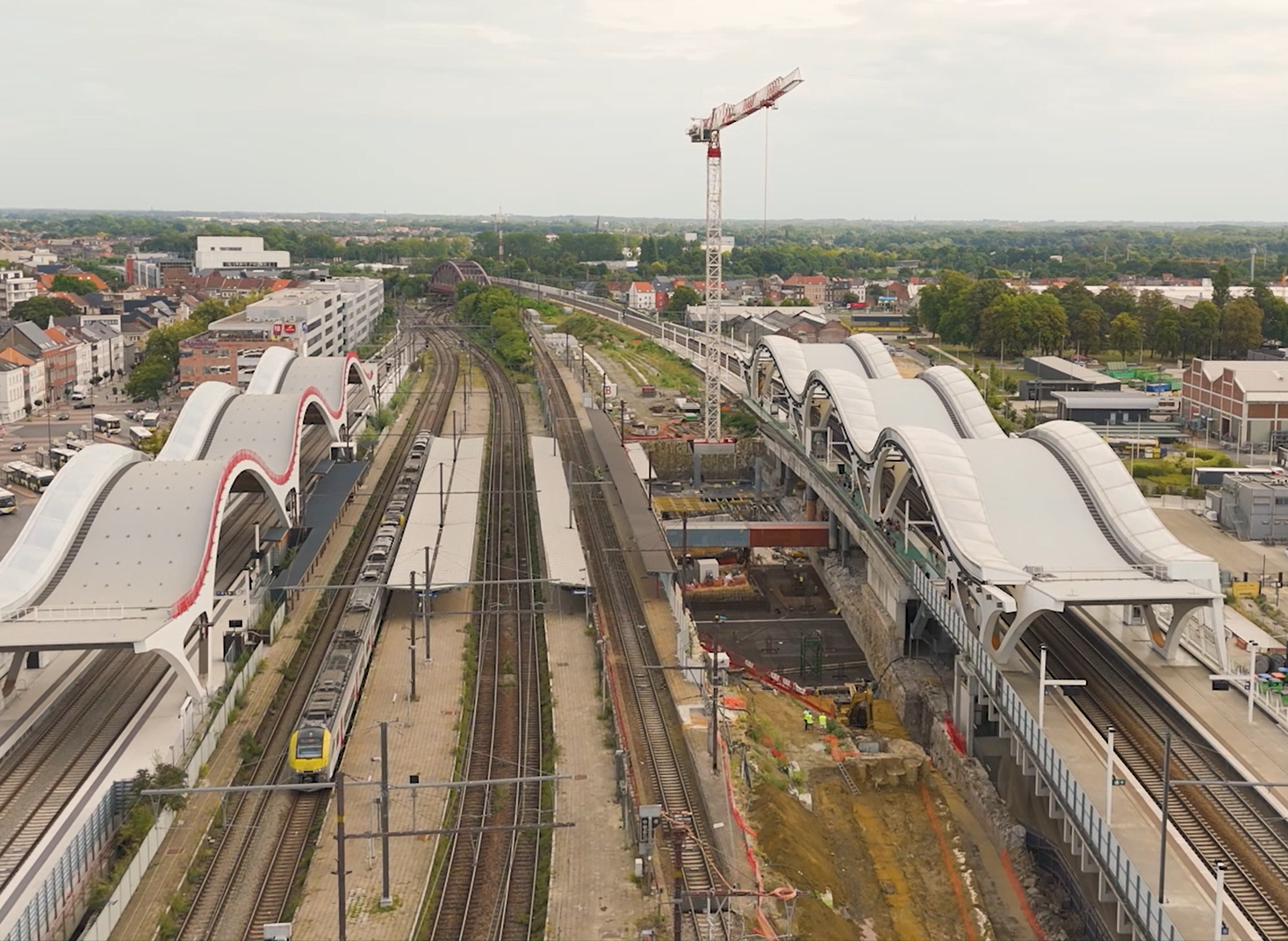
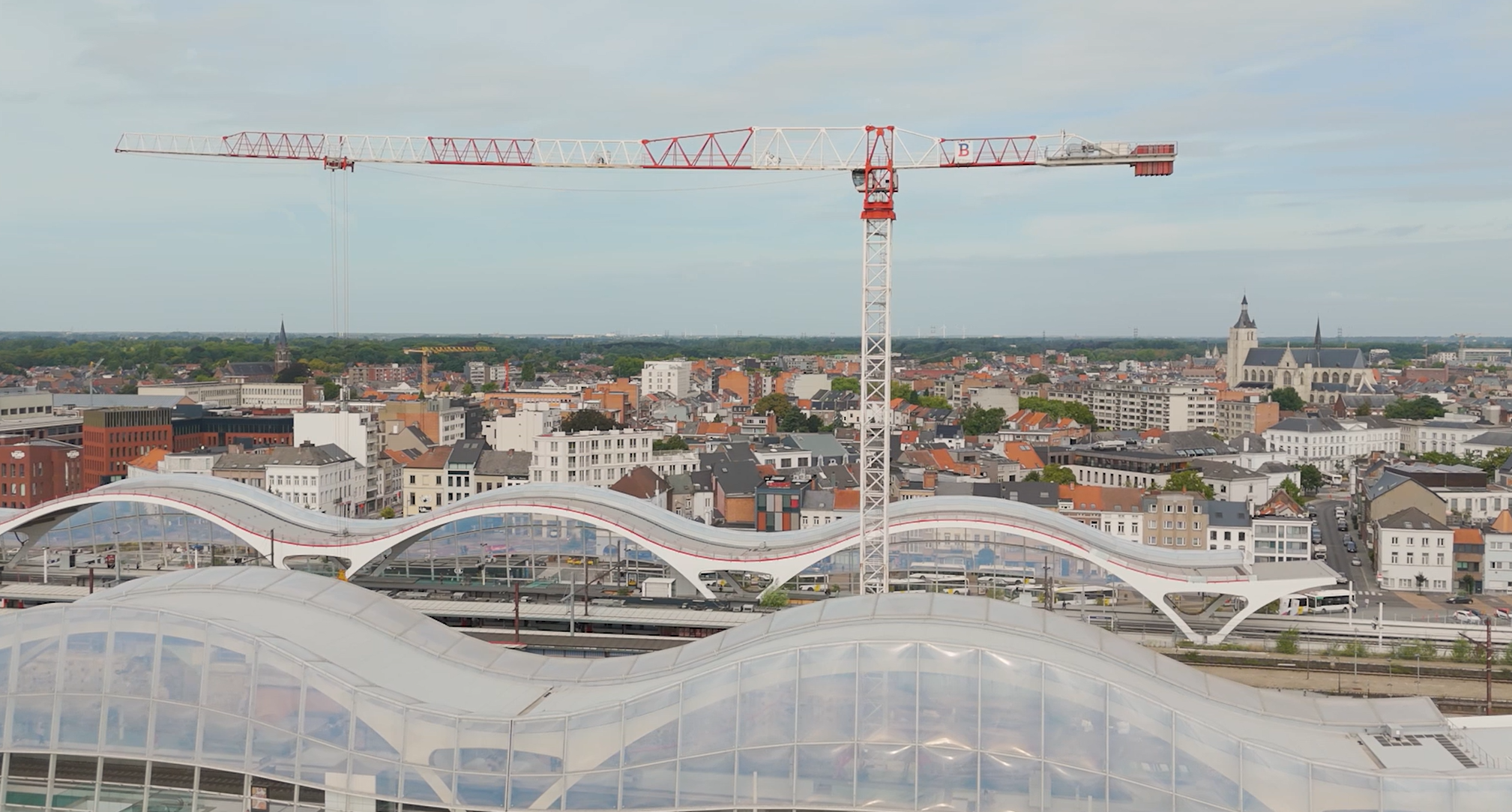
CIT Blaton and Artes are collaborating on a large-scale, four-phase project to build the new Mechelen station. The site spans multiple tracks and requires a constant, reliable power supply for several heavy tower cranes, including a YongMao STT553.24T and a Wolffkran 7534.16, for many years. The peak power requirements of these cranes are significantly higher than average, meaning that a standard electrical connection did not offer sufficient capacity. A traditional solution with diesel generators would lead to additional emissions, fuel costs, and noise pollution, which is undesirable in an urban environment and not in line with CIT Blaton's sustainability goals. The energy supply therefore had to be reliable, scalable, and emission-free, without the risk of downtime.
The goal
CIT Blaton sought an energy solution that:
- can handle the high peak capacities of multiple tower cranes,
- guarantees continuous power without diesel consumption,
- is operationally secure and scalable,
- and contributes to the structural reduction of the carbon footprint.
"The job site should be able to focus on building, not power.
With Neargrid, we know that the right energy is always present."
- Stefan Segers, Equipment specialist CIT Blaton
The solution
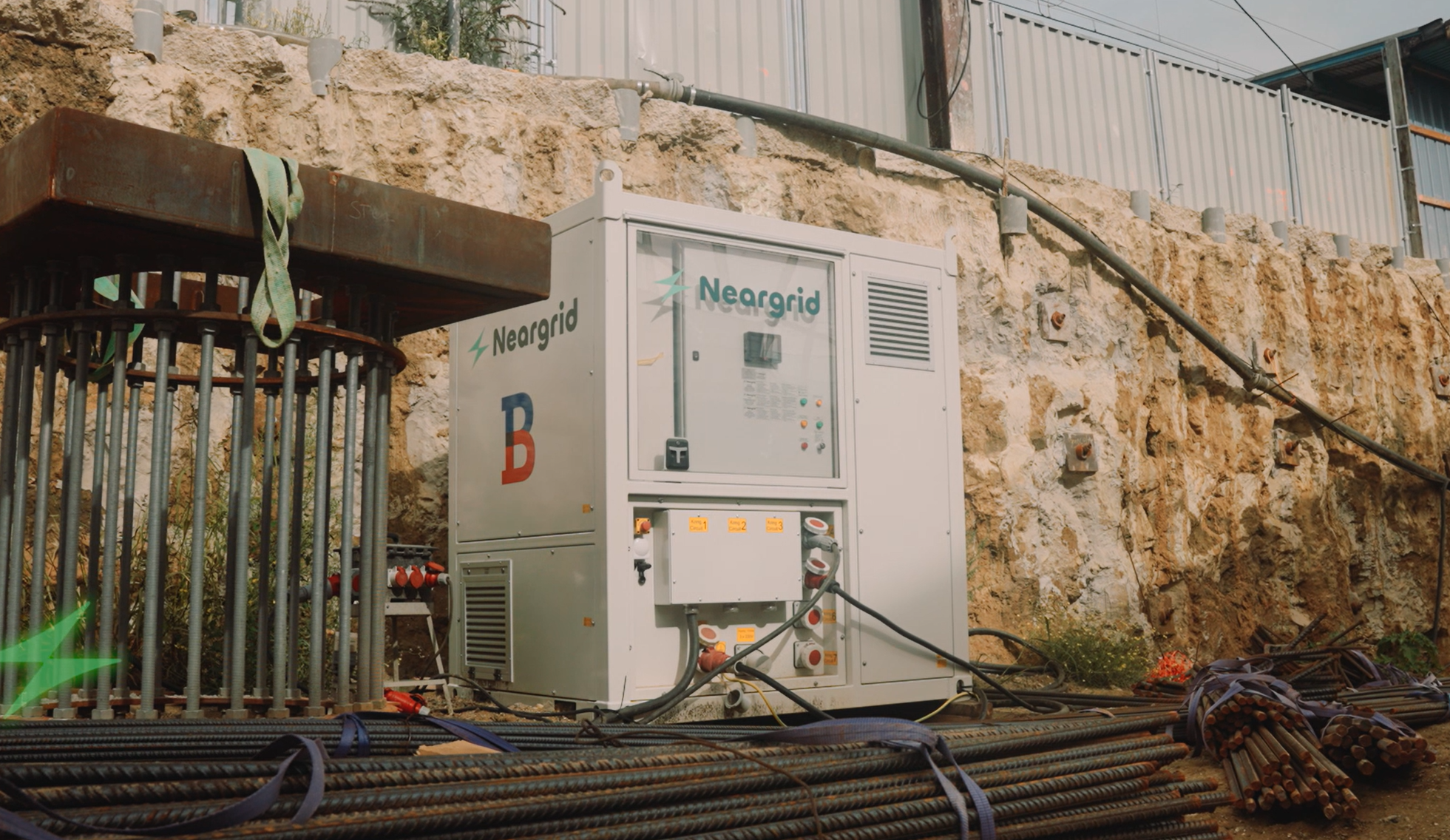
In collaboration with Neargrid, a Boost 200 battery arrangement was designed to act as an intelligent buffer between the grid and the site consumers.
Together, CIT Blaton and Neargrid determined the complete cabling plan and phasing, so that the power supply adapts flexibly as the project progresses.
The battery effortlessly delivers the peak power required by heavy tower cranes, without overloading the grid connection.
Thanks to smart control and remote monitoring, operation is fully automated and can be monitored remotely, without additional interventions or costs.
The result
The Boost 200 guarantees a stable, quiet, and emission-free energy supply, perfectly tailored to the dynamics of a large metropolitan infrastructure site. CIT Blaton can continue its construction activities uninterrupted, with a significantly lower environmental impact and without dependence on fossil fuels. This project confirms that even the largest sites can run entirely on electricity, powerfully, efficiently, and sustainably. "The site must be supplied with the right power at all times," says Stefan Segers, equipment expert at CIT Blaton. "With a traditional power generator, you always run risks. With Neargrid's battery, the energy supply is reliable, quiet, and completely emission-free. For CIT Blaton, this project is part of a broader sustainability vision that has been in place for more than fifteen years. "We want to actively reduce our CO₂ footprint," "It is our responsibility not to continue emitting and passing on the consequences to the next generation. Technologies such as Neargrid help us to truly deliver on that commitment." This keeps not only the station moving, but also the future of sustainable construction.

Date
January 2025
Location
Mechelen, Belgium
cranes
YongMao STT553.24T Wolffkran 7534.16
Grid connection
63A